
 English
 Français
 Deutsch
 한국어
한국어





OEM Airless Bottle manufacturing is a complete packaging development process that connects product design, mold development, material selection, sample production, testing, customization, injection molding, assembly, quality inspection, packaging, and mass production. For Cosmetic Brands, choosing the right OEM Airless bottle manufacturing partner can directly affect packaging quality, production efficiency, product presentation, and delivery reliability.
An airless bottle is designed to provide controlled dispensing for cosmetic formulations such as creams, lotions, serums, gels, and emulsions. However, producing a Reliable Airless Bottle requires more than simply molding a plastic container. The bottle body, Pump, internal airless mechanism, cap, dimensions, material, decoration, and filling requirements must work together as one packaging system.
This is why OEM airless bottle manufacturing should be treated as a complete development process rather than a simple purchasing activity. From the first drawing or sample to final mass production, every stage can influence the performance of the finished airless bottle.
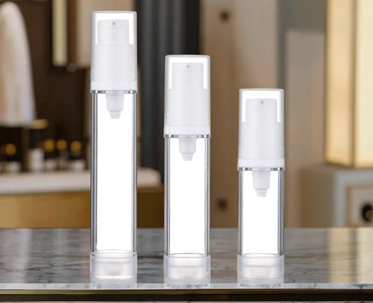
What Is OEM Airless Bottle Manufacturing?
OEM airless bottle manufacturing means producing airless Cosmetic Packaging according to a customer's specific design, sample, drawing, technical requirements, or product concept. The manufacturer handles some or all of the manufacturing processes required to transform the packaging concept into a finished airless bottle.
Depending on the project, OEM airless bottle manufacturing may include new mold development, plastic material selection, injection molding, pump assembly, color matching, surface treatment, printing, testing, packaging, and delivery. The exact process depends on whether the customer needs a standard airless bottle, a customized airless bottle, or a completely new packaging structure.
For cosmetic brands, OEM airless bottle manufacturing offers flexibility. Instead of adapting a product to an existing bottle, the packaging can be developed around the brand's formula, capacity, visual requirements, dispensing expectations, and target market.
Why OEM Airless Bottle Manufacturing Matters
The packaging of a cosmetic product has several responsibilities. It must hold the formula safely, provide convenient dispensing, maintain structural stability, support transportation, and present the product attractively to customers.
OEM airless bottle manufacturing allows these requirements to be considered during the development stage. The manufacturer can evaluate the bottle structure, pump system, capacity, material, and decoration together instead of treating each component as an unrelated part.
A properly developed airless bottle can provide a consistent dispensing experience while helping brands create distinctive packaging. For products positioned around skincare, moisturizing, anti-aging, beauty, or personal care, the packaging itself can become an important part of the product experience.
OEM airless bottle manufacturing is also useful for brands that need different capacities or packaging styles across a product series. Once the basic structure has been developed, related specifications can sometimes be adapted to create a coordinated packaging family.
Stage 1: Understanding the Customer's Requirements
The first stage of OEM airless bottle manufacturing is requirement confirmation. Before any mold is developed, the manufacturer needs to understand what the customer actually needs.
Important information may include the product type, formula viscosity, filling volume, Bottle Capacity, expected pump dosage, material preference, bottle dimensions, appearance, color, surface treatment, decoration, target market, filling process, and estimated order quantity.
If the customer already has a drawing, physical sample, or reference packaging, these materials can help the manufacturer understand the desired structure. If the customer only has a concept, an experienced OEM airless bottle manufacturing team can discuss practical options and help convert the concept into a manufacturable design.
This stage is important because design decisions made at the beginning can affect mold cost, production efficiency, material consumption, assembly, and final product performance.
Stage 2: Airless Bottle Design and Structure Development
After the requirements are confirmed, the airless bottle design can be developed. The design should balance appearance and function. A visually attractive bottle is not enough if the pump cannot dispense the formula consistently or if the structure is difficult to manufacture.
The bottle body, neck, shoulder, pump connection, internal piston, cap, and other components must be considered together. The internal structure is particularly important because it determines how the formula moves toward the dispensing outlet.
During OEM airless bottle manufacturing, designers also need to consider wall thickness, draft angles, component tolerances, assembly requirements, and injection molding feasibility. These details may not be visible to the consumer, but they can have a major impact on production quality.
A good design should therefore be attractive enough for the intended market while remaining practical for mass production.
Stage 3: Selecting Materials
Material selection is another important part of OEM airless bottle manufacturing. Different plastic materials have different characteristics in terms of strength, weight, appearance, processing, surface treatment, and chemical compatibility.
PP is commonly considered when lightweight packaging and practical processing are required. AS can provide a different visual appearance and may be selected for packaging projects where a more refined look is desired. PET can also be used when its transparency, strength, appearance, and processing characteristics fit the application.
The material should also be evaluated against the cosmetic formula. A packaging material that works well with one formula may not necessarily be the right choice for another formulation.
For this reason, OEM airless bottle manufacturing should include compatibility evaluation when required. Brands should test the actual cosmetic formula with the proposed packaging before approving mass production.
Stage 4: Mold Development
Mold development is one of the most important steps in OEM airless bottle manufacturing when a customized bottle is required. The mold determines the shape and many dimensional characteristics of the bottle body and related components.
A professional mold development process begins with the approved design. Engineers review the structure and consider injection molding requirements, cooling, material flow, ejection, dimensional stability, and production efficiency.
When a new airless bottle is developed, mold precision can affect the consistency of the finished products. If dimensions vary too much, assembly may become difficult or the pump and bottle components may not fit correctly.
Having mold development capabilities within the manufacturing process can also improve communication. Design adjustments can be discussed directly with the production team, helping reduce unnecessary communication between separate companies.
Stage 5: Prototype and Sample Production
Sample production allows customers to evaluate the OEM airless bottle before mass production. This is one of the most useful stages in the entire manufacturing process.
A sample can be used to evaluate the bottle's appearance, dimensions, pump action, cap fit, surface finish, color, capacity, and overall user experience. If the customer has a cosmetic formula available, the formula can also be tested inside the sample airless bottle.
For customized OEM airless bottle manufacturing, sample approval should be completed before large-scale production begins. Any necessary adjustments to the design, mold, color, pump dosage, or decoration can then be made before the production schedule is finalized.
This approach helps reduce the risk of discovering major packaging problems after mass production has already started.
Stage 6: Testing the Airless Pump System
The pump system is one of the most important functional components of an airless bottle. The pump needs to work smoothly and provide appropriate product dosage throughout normal use.
During OEM airless bottle manufacturing, testing can include initial priming, repeated pumping, dosage consistency, pump recovery, leakage resistance, and product evacuation. The actual cosmetic formula should be used whenever possible because viscosity can significantly influence dispensing behavior.
A very thick cream may require a different dispensing configuration from a lightweight serum. Therefore, manufacturers should not evaluate the pump using only water or another simple test liquid when the final cosmetic formula is available.
Repeated pumping is also important. A bottle may perform well during the first few uses but behave differently after extended use if the internal components are not properly matched.
Stage 7: Color Matching and Surface Finishing
OEM airless bottle manufacturing is not limited to functional production. Cosmetic brands often require customized decoration to create a consistent visual identity.
Color matching can be used to produce bottle bodies and components in specific colors. A manufacturer may also provide silk-screen printing, hot stamping, frosting, electroplating, and other surface finishing options according to the packaging design.
These processes can change the appearance and tactile quality of the airless bottle. Frosting can create a softer visual effect, while electroplating can provide a more decorative surface. Printing can be used for product information, brand elements, or other approved graphics.
For consistent production, the approved sample should be used as a reference. Color and surface treatment should be checked before mass production so that the final packaging remains consistent with the approved design.
Stage 8: Injection Molding
Injection molding is a core manufacturing process in OEM airless bottle manufacturing. Plastic material is heated and injected into the mold cavity, where it takes the required shape before cooling and being removed from the mold.
The quality of injection molding can influence dimensional accuracy, surface appearance, strength, and assembly. Production parameters need to be controlled according to the material, mold structure, bottle design, and equipment.
Consistent molding is especially important for large orders. If the bottle dimensions vary significantly between production batches, the pump, cap, and other components may not assemble consistently.
A manufacturer with appropriate injection molding equipment and experienced production personnel can monitor these factors throughout the production process.
Stage 9: Component Assembly
An airless bottle is normally a system made from multiple components rather than one single plastic part. Assembly brings the bottle body, pump mechanism, cap, piston, and other components together.
During OEM airless bottle manufacturing, assembly accuracy can directly influence the final dispensing performance. Components need to fit correctly, and the pump must operate smoothly after assembly.
Assembly inspection can identify problems such as loose components, incorrect fitting, cosmetic defects, or abnormal pump operation. Automated or manual assembly methods may be selected according to production volume and product structure.
Stage 10: Quality Control
Quality control runs through the entire OEM airless bottle manufacturing process rather than occurring only at the end. Raw materials, molds, injection molding, components, decoration, assembly, and finished products can all require inspection.
Typical quality checks may include dimensions, weight, color, surface appearance, printing quality, pump operation, leakage resistance, component fit, and dispensing performance.
For customized OEM airless bottle manufacturing, quality standards should be confirmed with the customer before production. The manufacturer and customer should have a clear understanding of acceptable appearance, dimensions, color tolerance, decoration, and functional requirements.
This makes the final inspection more objective and helps reduce misunderstandings between the manufacturer and cosmetic brand.
Stage 11: Mass Production
Once the airless bottle sample has been approved and all specifications are confirmed, mass production can begin. At this stage, production efficiency becomes increasingly important.
OEM airless bottle manufacturing for mass orders requires stable raw materials, reliable molds, suitable injection molding equipment, organized assembly, consistent decoration, and effective inspection procedures.
Production planning should consider order quantity, mold availability, machine scheduling, decoration requirements, assembly capacity, inspection time, packaging, and delivery deadlines. A well-organized production process can help maintain consistent output while reducing unnecessary delays.
For long-term customers, production records and approved samples can also provide useful references for repeat orders. This helps maintain consistency when the same airless bottle specification is manufactured again.
Stage 12: Packaging and Delivery
After production and inspection, finished Airless Bottles need to be properly packaged for storage and transportation. The packaging method should protect the bottles and their decorative surfaces while making handling and counting easier.
OEM airless bottle manufacturing may involve domestic or international delivery, so transportation conditions should be considered during packaging development. Cartons, pallets, protective materials, and other packing methods can be selected according to product size, quantity, and shipping requirements.
For export orders, clear packing information and coordinated delivery arrangements can help improve logistics efficiency. The final delivery process should match the customer's production schedule and inventory requirements.
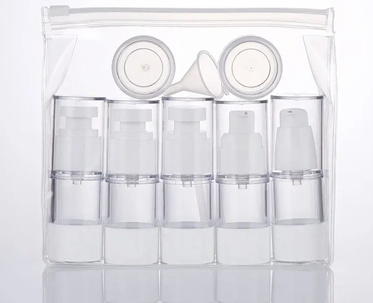
Common Applications of OEM Airless Bottles
OEM airless bottle manufacturing is widely applicable to cosmetic packaging projects involving products that require controlled dispensing. Common applications include facial creams, moisturizing lotions, facial serums, emulsions, gels, hand creams, body lotions, and other personal care formulations.
The capacity and dispensing dosage can be adjusted according to the application. Small airless bottles may be appropriate for concentrated products or travel-size packaging, while larger formats may be suitable for body care products or products intended for frequent use.
The visual design can also be adapted to different product positions. A minimalist bottle may suit everyday skincare, while a more decorative design may be developed for products that require a stronger premium visual presentation.
Benefits of OEM Airless Bottle Manufacturing
One major benefit of OEM airless bottle manufacturing is customization. Brands can develop packaging according to their own requirements rather than selecting only from standard market options.
Another benefit is process integration. When the same manufacturer can support mold development, injection molding, surface treatment, assembly, testing, and packaging, communication can be more efficient.
OEM airless bottle manufacturing can also support product differentiation. Customized bottle shapes, colors, capacities, and decorations can help create packaging that is visually different from standard packaging.
Finally, professional OEM airless bottle manufacturing can help brands control quality from development to mass production. Sample approval and continuous production inspection provide multiple opportunities to identify and correct problems.
How to Choose an OEM Airless Bottle Manufacturer
Selecting the right manufacturing partner is an important decision. Cosmetic brands should look beyond the product catalog and evaluate the manufacturer's actual production capabilities.
First, check whether the manufacturer has its own production facility and suitable injection molding equipment. Second, confirm whether it can support mold development if customized packaging is required. Third, ask about sample development, testing, color matching, decoration, assembly, and quality inspection.
It is also useful to understand the manufacturer's communication and delivery process. A supplier that responds quickly, provides samples efficiently, and can offer practical packaging suggestions may be easier to work with during a new product launch.
Finally, consider whether the manufacturer can support repeat orders and long-term production. Stable supply is particularly important when the airless bottle becomes part of an established cosmetic product line.
OEM Airless Bottle Manufacturing at Yuyao Dingyu
Yuyao Dingyu Plastic Industry Co., Ltd. is a cosmetic packaging manufacturer located in Yuyao, Ningbo, Zhejiang, China. The company operates its own manufacturing facility covering approximately 5,000 square meters and focuses on Airless Cosmetic Bottles and other beauty packaging products.
The factory has mold development workshops, multiple injection molding machines, and complete testing instruments. These capabilities support OEM airless bottle manufacturing from customized design and mold development through sample production and mass production.
For customers providing drawings or physical samples, the company can support OEM and ODM development according to specific packaging requirements. Services include new mold development, color matching, silk-screen printing, hot stamping, electroplating, frosting, and other surface finishing processes.
Matching pump heads can also be supplied according to the requirements of different airless bottle projects. Samples can be prepared for customer evaluation before mass production, allowing brands to test the packaging with their own cosmetic formulas.
The company also provides export packaging and supports customers in multiple international markets. From initial sample communication to production, inspection, packaging, and delivery, the OEM airless bottle manufacturing process can be coordinated according to the customer's project requirements.
Key Points to Confirm Before Mass Production
Airless bottle design and dimensions
Cosmetic formula compatibility
Bottle material
Capacity and filling volume
Pump dosage
Internal airless dispensing structure
Cap and component specifications
Color and surface treatment
Printing and decoration requirements
Mold development requirements
Sample approval standards
Quality inspection requirements
Order quantity and production schedule
Packaging and transportation requirements
Conclusion
OEM airless bottle manufacturing is a complete process that begins with understanding the customer's product requirements and continues through design, mold development, material selection, sampling, testing, injection molding, decoration, assembly, quality control, packaging, and mass production.
The success of an OEM airless bottle project depends on how well these stages are connected. A good design must be suitable for manufacturing. The selected material must work with the cosmetic formula. The pump must provide suitable dispensing performance. The mold must support stable production. Decoration must match the approved sample. Finally, mass production must maintain consistent quality from the first unit to the last.
For cosmetic brands developing customized packaging, working with an experienced OEM airless bottle manufacturing partner can simplify the process and reduce communication between multiple suppliers. By combining design support, mold development, injection molding, testing, customization, assembly, and delivery, the packaging development process becomes easier to manage from the first concept to the finished product.
With the right manufacturing process and careful sample evaluation, an OEM airless bottle can provide a practical combination of dispensing performance, product presentation, customization, and production efficiency. For brands planning new skincare and cosmetic packaging, OEM airless bottle manufacturing provides a flexible path from an initial design concept to reliable mass production.
SEO Description: Discover how OEM airless bottle manufacturing works from design and mold development to sampling, injection molding, customization, assembly, quality control, packaging, and mass production. Learn how cosmetic brands can develop reliable Airless Bottle Packaging matched to formulas, capacities, pump systems, and product requirements.



 Whatsapp
 Teléfono
 E-mail
 mensaje
Comentario
(0)